Pool Leak Detection: Measuring Water Loss vs. Pinpointing the Exact Leak
Understanding the difference between water-loss measurement and leak-source location
When a pool loses water faster than normal, the first instinct is to find out how much is going and where. These two questions, how much and where, sound similar but lead to very different approaches. Measuring the rate of water loss tells you whether a leak exists and how serious it is. Locating the exact source tells you where to dig, patch, or replace. A pool owner or service professional needs to know which method fits the situation, and when to combine them.
Water-loss measurement: the numbers-first approach
Water-loss measurement is the simplest and least invasive way to confirm a leak. You fill the pool to its normal level, mark that level, and run the filtration system on its usual schedule for 24 to 48 hours. Then you measure the drop. A bucket test, placing a bucket weighted down with a few stones on the top step, filling it to the same level as the pool, and comparing the water loss inside the bucket versus the pool, helps separate evaporation from an actual leak. If the pool loses significantly more water than the bucket, a leak is almost certain.
This method gives you a water loss rate. That rate can guide decisions: a slow loss of a quarter-inch per day might be acceptable in a hot climate where evaporation is high, while a half-inch or more per day usually signals a problem worth investigating. The test costs nothing but time and uses no special equipment. It also requires no knowledge of the pool structure or underground plumbing. For a quick check before calling a professional, a bucket test is hard to beat.
However, water-loss measurement has a major limitation: it tells you nothing about where the leak is. A measurable loss could come from a cracked shell, a failed gasket in the pump, a split in the return line, or a slow weep behind a light niche. The test narrows the problem down to "there is a leak" but leaves you guessing about the next step. That is why many pool service companies use water-loss measurement as a screening tool, not a diagnostic finish.
Locating the exact leak source: the targeted approach
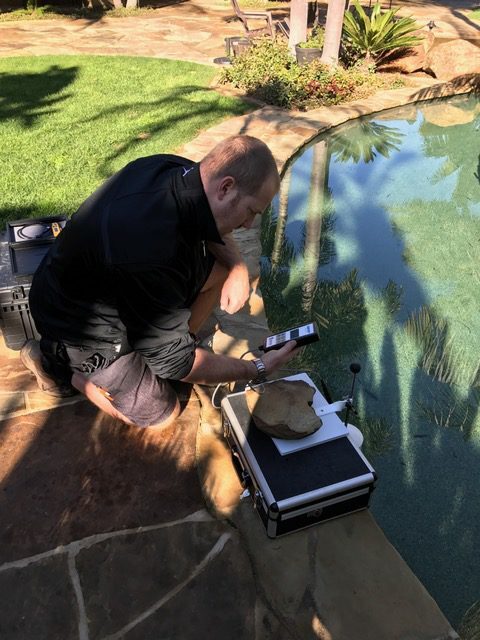
Once a leak is confirmed, the next question is where it originates. Locating the exact source usually requires more time, more equipment, and often more expertise. A leak analyzer, a device that injects a harmless tracer gas into the plumbing and detects where it escapes, can trace a leak in underground pipes without excavation. Pressure testing the return lines with a gauge tells you whether the plumbing holds pressure. For shell cracks, a technician might use a dye test: squirting a small amount of concentrated dye near a suspected crack and watching to see if the current pulls it into the break.

Each technique has its own strengths. A dye test is quick and cheap for visible cracks in the plaster or fiberglass. Pressure testing is reliable for underground plumbing but requires access to the equipment pad and often a second person to watch the gauge. Tracer-gas detection is more sophisticated and works well for leaks that are buried deep or hard to reach, but it requires specialized testing equipment and training to interpret the results. None of these methods is universal; the right choice depends on the pool structure, the type of leak suspected, and the access points available.
One common mistake is jumping straight to source location without first confirming the leak exists. A pool that is losing water only from evaporation or a backwash cycle can lead to unnecessary digging and expense. That is where a water-loss measurement first, followed by a targeted source location, makes sense. The two approaches complement each other: the measurement tells you whether to proceed, and the source location tells you where to act.
When each approach fits best
Water-loss measurement is ideal for routine checks. If you notice the water level dropping faster than usual, a bucket test can confirm a leak in a day or two. It is also useful after a repair: a post-repair measurement tells you whether the fix actually stopped the loss. For a pool that has been stable for years and suddenly starts losing water, the measurement gives you a clear yes-or-no answer before you spend money on diagnostic equipment.
Source location is necessary when the leak is persistent, the water loss is large, or the pool has complex plumbing. A pool with multiple return lines, a spa spillover, or a waterfall feature has many places where a leak can hide. In those cases, guessing is expensive. A professional can isolate each circuit, pressure-test the lines, and check each fitting. The same applies to pools with underground plumbing: a leak in a buried pipe can cause water to seep into the ground without any visible sign. A tracer-gas test or a pressure test is the only way to find it without excavating the entire yard.
There is also a middle ground: a visual inspection of the equipment pad, the pump strainer basket, the filter o-ring, and the light niches. Many small leaks are at these access points and can be fixed with a new gasket or a bit of silicone. A thorough visual check costs nothing but a few minutes and can save the cost of a full diagnostic call. But if the visual check shows nothing and the water loss continues, then the choice between measurement and source location becomes clear. Measurement first, then location if needed.
The role of professional inspection before pool repairs
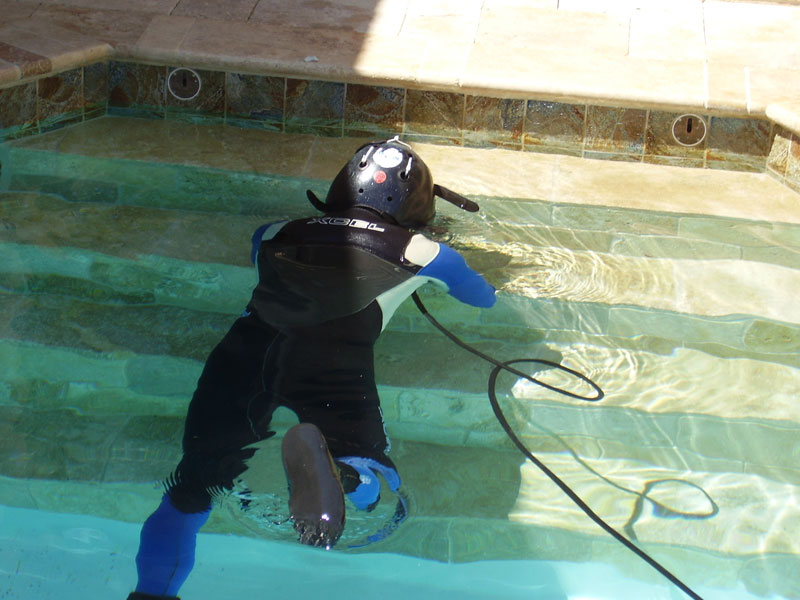
For a pool owner who has done a bucket test and found a measurable loss, the next step is often a professional inspection before pool repairs. A qualified technician can bring a leak analyzer, pressure-test the plumbing, and check the shell for cracks. That inspection scope covers all the common leak points: the pump, the filter, the heater, the return lines, the skimmer, the main drain, and the light niches. The technician will also check the water loss rate with their own equipment, which is usually more precise than a bucket test, and then move to source location if the loss is confirmed.
This is the point where the two approaches merge. The measurement confirms the leak, and the source location finds it. Without the measurement, a technician might chase a phantom leak that is only evaporation. Without the source location, the measurement leaves you with a number but no action. A good professional uses both, and the order matters: measure first, then locate.
Practical considerations for pool owners
If you suspect a leak, start with the simplest test. Fill the pool to its normal level, turn off the auto-fill if you have one, and mark the water level on the tile. Run the pump on its normal schedule and check the level after 24 hours. If you have a spa that overflows into the pool, test the spa separately by filling it and letting it sit with the pump off. A spa that loses water when the pump is off usually has a leak in the shell or the spa-side plumbing. A spa that only loses water when the pump is running points to a leak in the return line or the equipment.
Once you have a number, decide whether the loss is worth fixing. A slow leak that loses an eighth of an inch per day may not be urgent, especially if the pool is used only in summer. A loss of half an inch or more per day will cost you in water bills and chemical treatment, and it can lead to structural damage if the water level drops below the skimmer or the light niches. At that point, a professional inspection before pool repairs is a wise investment. The inspection will tell you exactly what is wrong and give you a repair estimate that is based on facts, not guesses.
Choosing the right approach for your pool
The decision between water-loss measurement and exact source location depends on your goal. If you want to know whether a leak exists, measure the loss. If you want to know where to fix it, locate the source. In practice, most pool owners need both, and they need them in the right order. Start with the measurement, and if the number says there is a problem, move to source location. That sequence saves time, money, and frustration.
For a pool with complex features, underground plumbing, or a history of repairs, skipping straight to source location might be tempting, but it is rarely efficient. A professional who starts with a measurement can often narrow the search area before pulling out the leak analyzer. And a professional who starts with source location without a measurement might spend hours chasing a leak that is actually a leaky backwash valve or a missing o-ring. The two approaches are not rivals; they are partners in the same job.